
Saint-Lô and its national stud
A stud founded under Napoleon where stallions still live, a big equestrian event every summer, and a town rebuilt after being the “capital of ruins”: Saint-Lô is well worth a day, 20 minutes from the campsite.
- The Saint-Lô national stud: about 18 min by car (17 km) from the campsite, about 1 h by bike (15 km).
- Free self-guided visit of the stud, all year round, every day from 10 am to 5 pm. Guided tours in summer, on Thursdays.
- Normandie Horse Show: every year in late July - early August. In 2026, from 27 July to 9 August; the 2027 dates have not been published yet.
- Saint-Lô, the “capital of ruins” in 1944: the church of Notre-Dame and the ramparts tell the story of the war and the rebuilding.
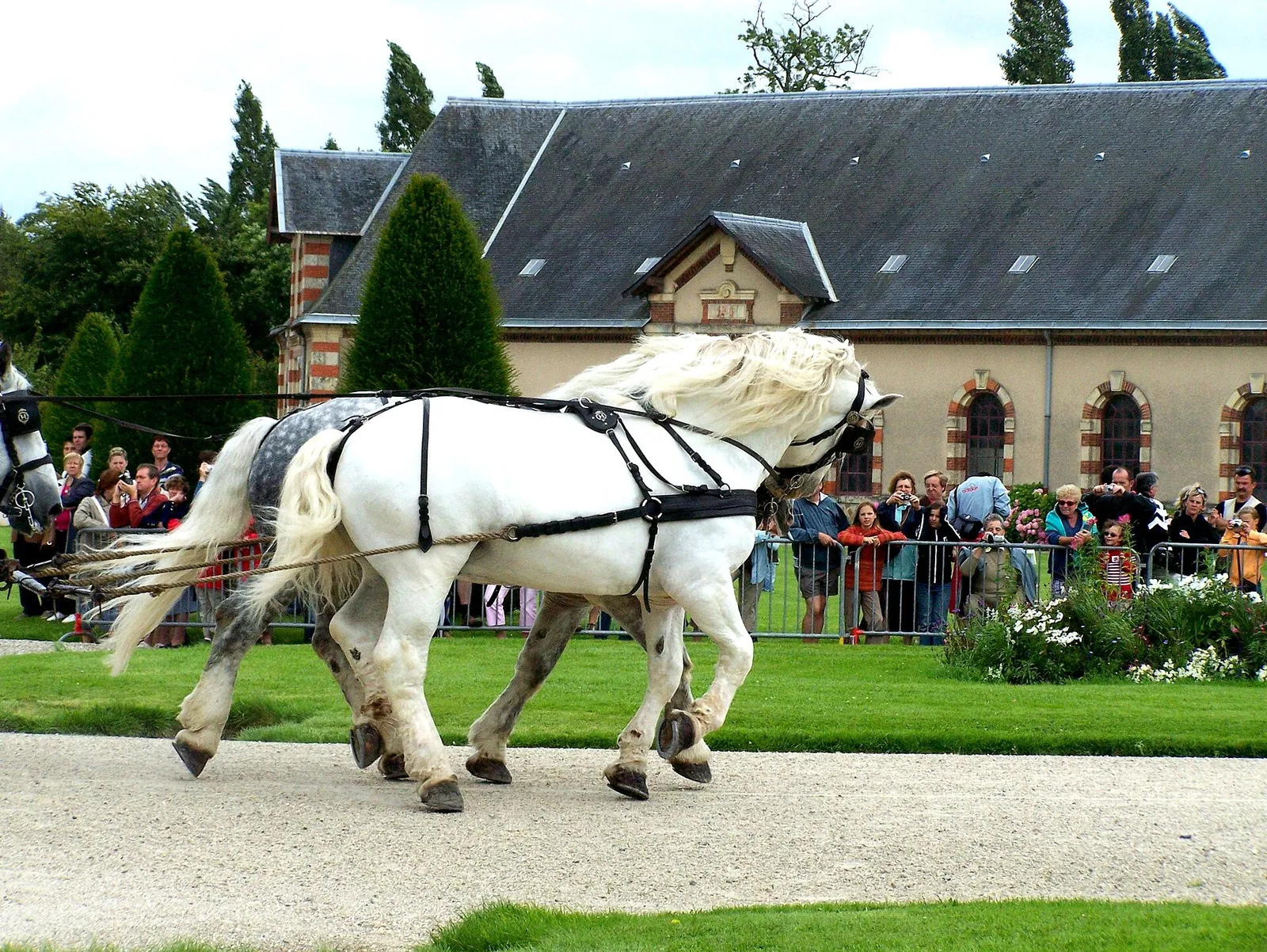
Saint-Lô is the prefecture of the Manche, and the nearest large town to the campsite. People often drive through without stopping. That is a shame: the town has a powerful history, a national stud where stallions still live, and a real calendar of horse events. Here is what we recommend to our campers to make the most of it, over half a day or a whole day.
The Saint-Lô national stud, two centuries of horses
The stud was founded in 1806, by decision of Napoleon I. At first it was a simple stallion depot, set up in the former abbey of Sainte-Croix. The first horses came from the Haras du Pin. The depot grew fast: thirty stallions in 1807, more than eighty by the mid-19th century. The old buildings were no longer big enough.
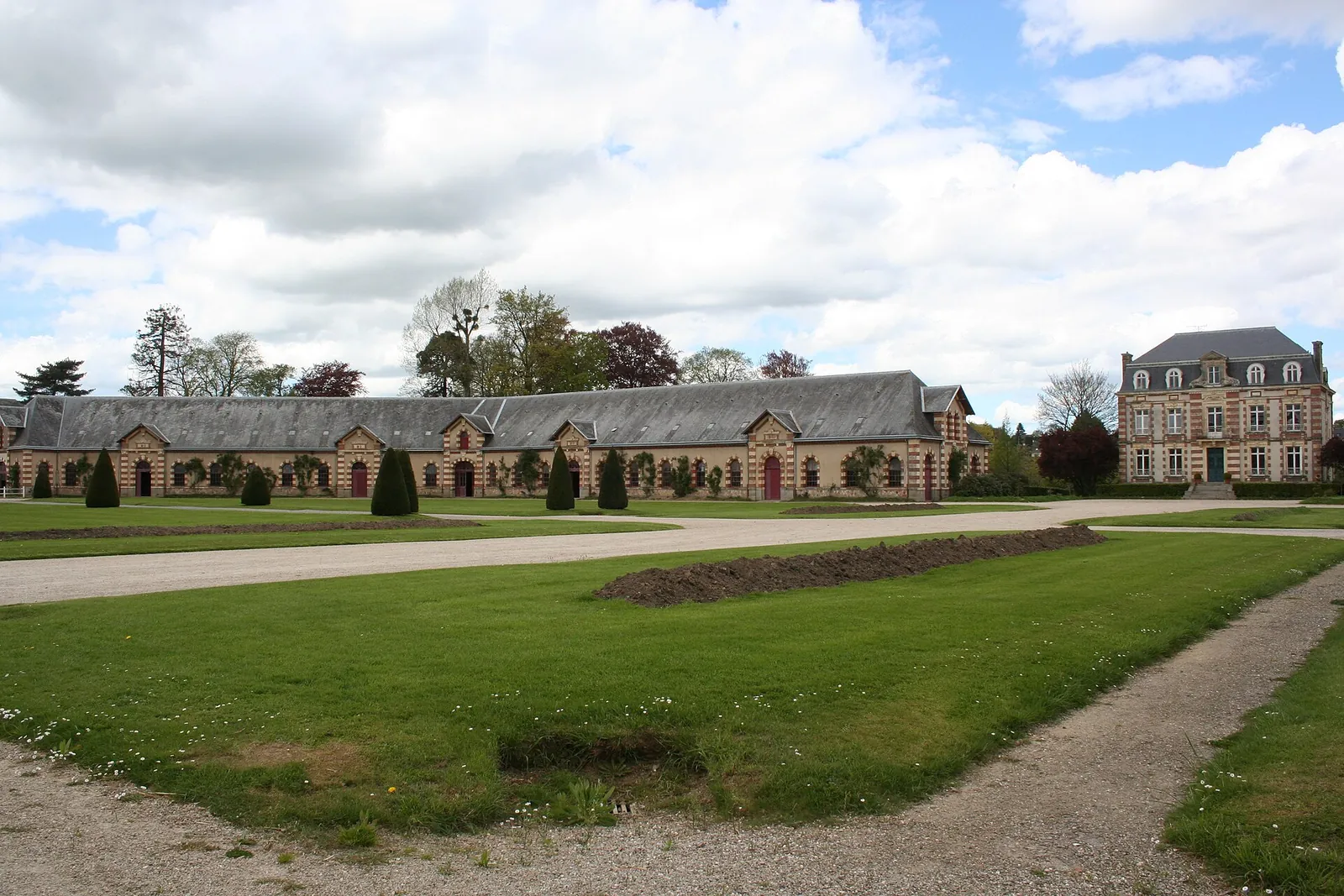
The town then bought a plot of about 7 hectares on the road to Bayeux and gave it to the State. The present buildings were built there in the 1880s and 1890s: the director's house, long brick and stone stables, courtyards and a park. In 1912, the stud reached its peak with 422 stallions. They were spread around the countryside for covering, in other words breeding, to serve the breeders.
From the war to the present day
The bombing of 1944 destroyed part of the stud. It was rebuilt exactly as before after the war. Since 1993, its façades, roofs, boundary walls, courtyards and park have been listed as historic monuments.
In 2017, the State sold the site to the Pôle hippique joint authority, which brings together the Manche Département, the Normandy Region, the town of Saint-Lô and Saint-Lô Agglo. The site keeps the right to use the name “Haras national”. It is still home to around forty stallions, mainly Selle Français, the large sport horse, and Cob Normand, the region's light draught horse, whose national breed society has its headquarters here.
On the night of 11 to 12 July 2019, a fire destroyed two 19th-century stables and the breeding station. All the horses were saved. Rebuilding began in 2026: expect to see building work on part of the site.
The Pôle hippique, a site that is busy all year round
The stud is not a museum frozen in time. Around the historic buildings, the Pôle hippique brings together a riding centre, outdoor arenas and indoor schools, a large hall, a breeding station and the organisations of the horse industry. According to the tourist office, the site hosts five equestrian disciplines and more than 120 days of competition a year. There is almost always something to see: a competition, a training session, horses being walked along the paths.
Visiting the Saint-Lô stud: opening times and prices
The self-guided visit, free of charge
The site is open all year round, every day from 10 am to 5 pm, and the self-guided visit is free. A leaflet, available at both entrances, suggests a trail called “Balade au pas dans les coulisses du Haras” (a walk behind the scenes of the stud), with 23 points of interest. Allow about an hour. The ground is gravel but accessible with a pushchair. Parking, toilets, a picnic area and bike parking are on site.
Guided tours and summer activities
Here is what was on offer in summer 2026. The 2027 programme has not been published yet, but it gives a good idea of what to expect:
- Guided tours : on Thursdays in July and August (from 16 July to 20 August in 2026), starting at 10.30 am and 2.30 pm, lasting 1 h 30. Price: €6 per adult, free for under-12s. Booking required.
- Pony rides for ages 3 to 12: on Tuesday, Thursday and Saturday afternoons (2 pm-5.30 pm), from 11 July to 22 August in 2026. €5 for 15 minutes, no booking needed.
- Equestrian shows : two evenings or afternoons during the summer, at €10 per adult, €5 for ages 6 to 12, free for under-6s.
- Horse rides with the riding centre, in July and August: €26 per adult and €22 per child in a group (4 to 8 people), by reservation.
- Summer exhibition in stable no. 5, which houses the stud's small museum, free entry (Tuesday to Sunday, 2 pm-6 pm).
Dates, times and booking numbers are on the Visites, expositions et animations page of the Pôle hippique website. Check them before you come.
Normandie Horse Show and big equestrian events
The Normandie Horse Show, in summer
This is the big event of the year. For almost two weeks, in late July and early August, the stud hosts breeding shows (Selle Français, Cob Normand, ponies), show jumping for young horses, carriage-driving events, a foal fair and an international show-jumping competition. In 2026, it was held from 27 July to 9 August. The international show jumping took up the last four days, with a 1.55 m Grand Prix on the Sunday, and a breeding evening with a show took place on 5 August.
Good news for families: according to the organisers, access to the Normandie Horse Show is largely free. Only a few evenings and the covered show-jumping stand are paid. The 2027 dates have not been announced yet: they will be published on the official Normandie Horse Show website, and we will add them to our events calendar as soon as they are out. This period is high season at the campsite: remember to book early.
Other events
- The Salon des étalons de sport (sport stallion show): the 21st edition will take place from 19 to 21 February 2027, free entry. Please note, the campsite is closed to the public at that time.
- The 4-star international show jumping : five days of top-level show jumping, in 2026 from 25 to 29 November. The 2027 dates are not yet known.
- The stud's Christmas market : 5 and 6 December 2026, free entry.
- Breeding shows, the Grand National show-jumping series and regional competitions : they punctuate the year. The easiest thing is to check thePôle hippique events calendar.
Saint-Lô, the “capital of ruins”
Saint-Lô was born on a rocky spur overlooking the Vire. This rock, ringed by ramparts, is called the Enclos. For centuries, the town lived from trade, fairs and cloth, around its church of Notre-Dame.
Everything changed in 1944. On the night of 6 to 7 June, the evening of D-Day, American aircraft bombed the town to cut the roads to German reinforcements. Hundreds of civilians died. In July, Saint-Lô was at the heart of the Battle of the Hedgerows. The American major Thomas Howie was killed on 17 July, at the gates of the town. The next day, when American troops entered Saint-Lô, his body, wrapped in a flag, was laid on the ruins of the church of Sainte-Croix. The photo went all around the United States, where he became “the Major of Saint-Lô”.
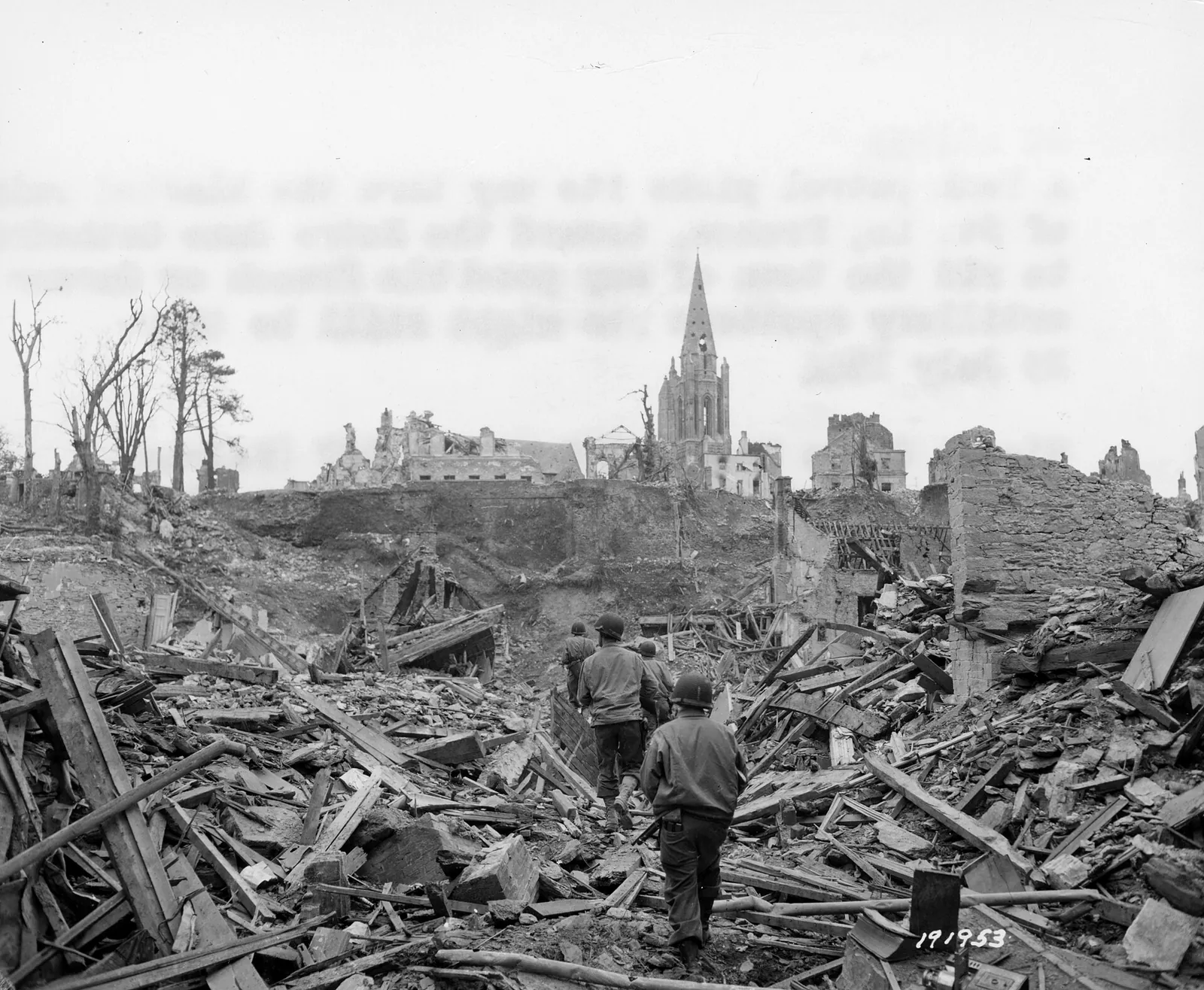
The town was about 90% destroyed, according to the most widely quoted estimates. It was then nicknamed the “capital of ruins”. The Irish writer Samuel Beckett, who came after the war to help the Irish Red Cross set up a hospital in Saint-Lô, made the expression famous in a piece written for Irish radio in 1946. In 1948, the town was awarded the Légion d'honneur.
Some people then suggested leaving the ruins as they were and rebuilding further away. The inhabitants refused. After years in wooden huts sent from Switzerland, Sweden, Finland or the United States, permanent rebuilding began in 1948. Saint-Lô became one of the most striking examples of the Reconstruction in France, with its concrete, its town hall and its 1954 belfry.
What to see in Saint-Lô
The church of Notre-Dame, a scar it wears openly
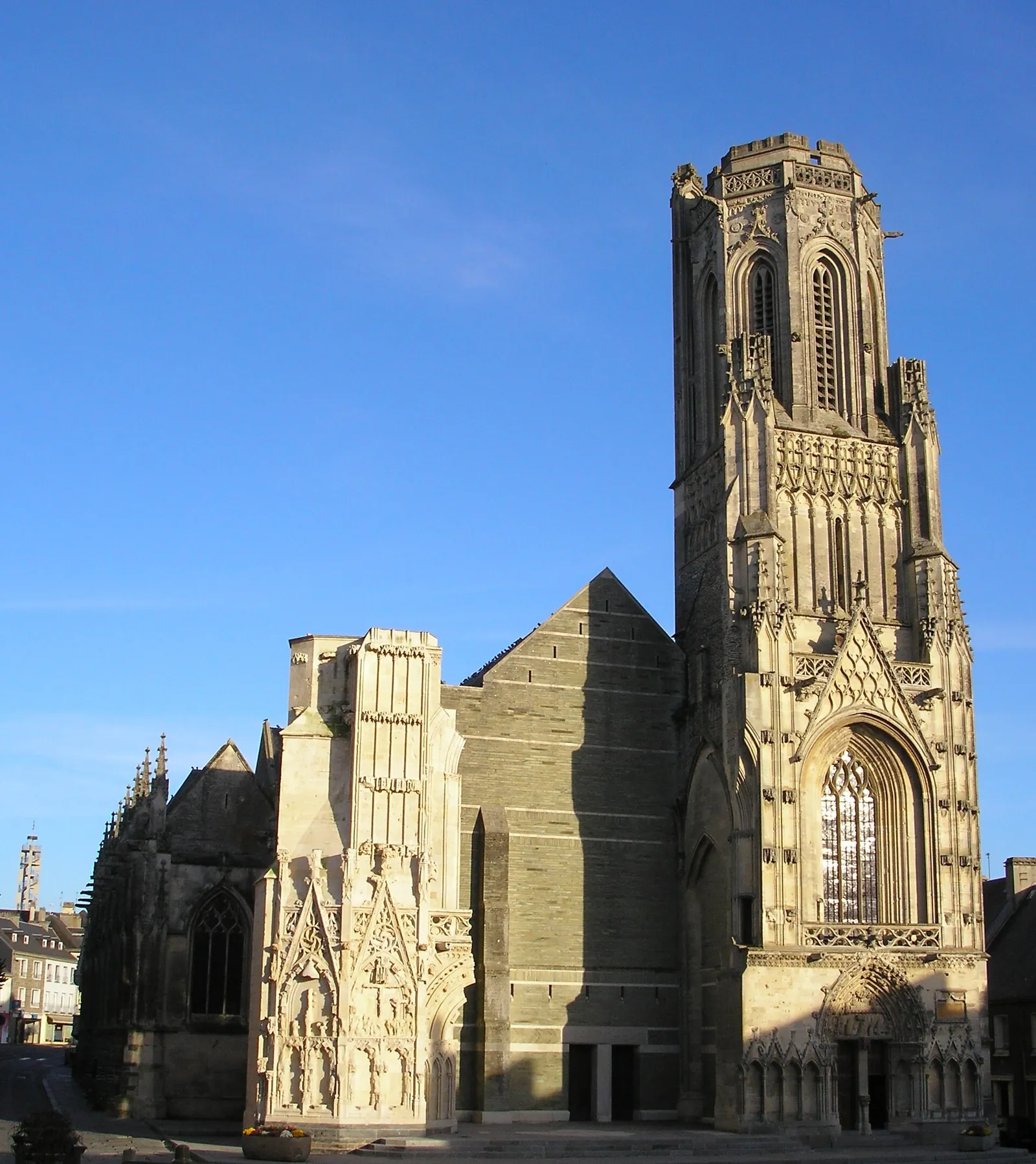
Listed among the very first historic monuments in 1840, the Gothic church of Notre-Dame was built from the 13th to the 17th century. In 1944, the north tower collapsed under shellfire and tore open the nave. Rather than rebuild the façade exactly as it was, the architect Yves-Marie Froidevaux chose to keep the ruin as a memorial against war. A bare wall of green Cotentin schist was built set back from the old façade. The work was finished in 1972, with three bronze doors. The result is surprising, and moving.
Walk around the church: on the north side, a rarity awaits you. It is an outdoor pulpit in stone, built at the end of the Middle Ages for Bishop Geoffroy Herbert. Victor Hugo drew it. Inside, the old stained-glass windows, taken down and stored safely during the war, were saved.
The Enclos ramparts and the banks of the Vire
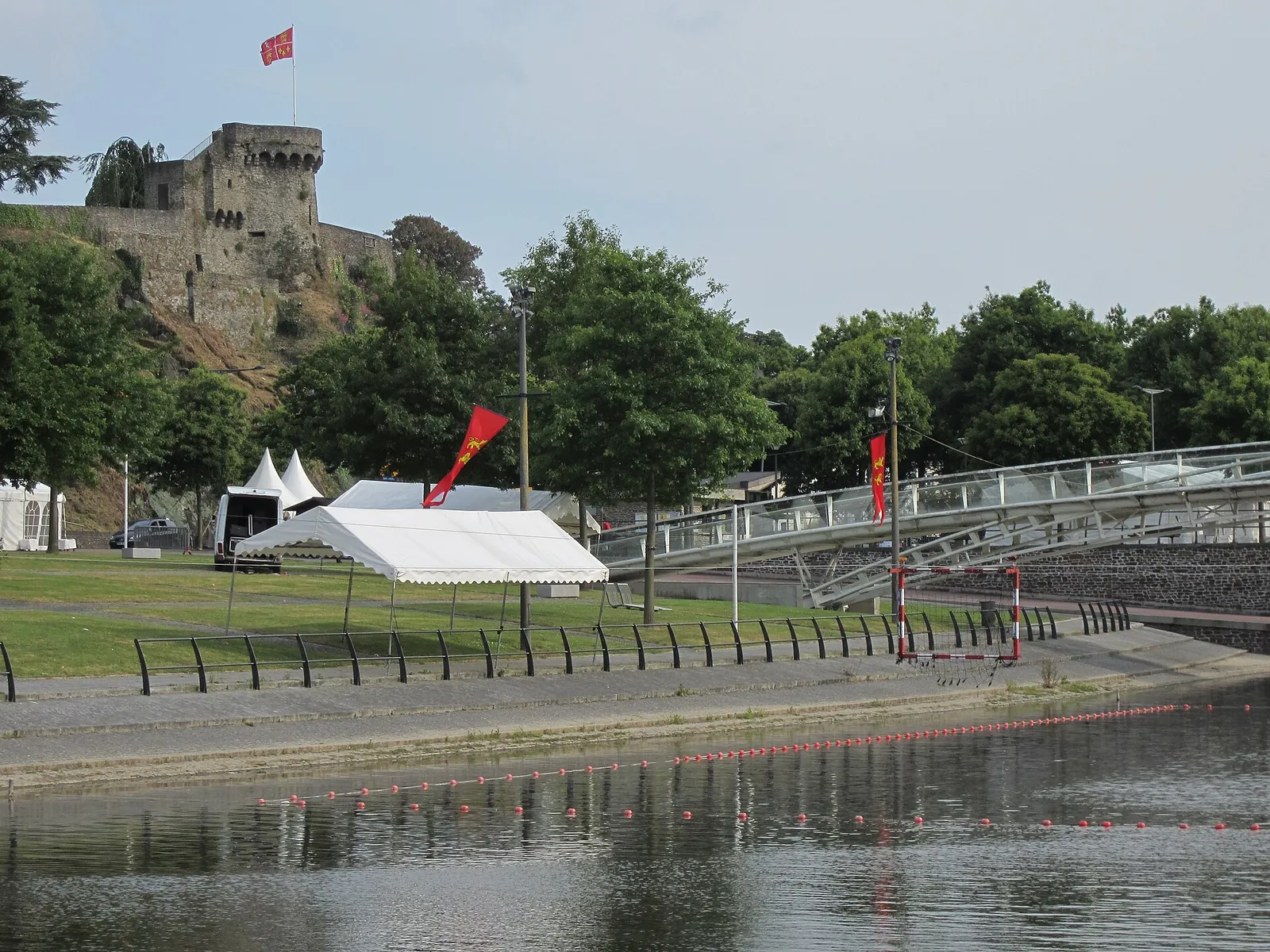
Three of the four sides of the ramparts survive. The Tour des Beaux-Regards offers a fine view over the Vire. The Tour de la Poudrière and the Porte Dollée are also worth a detour. Down below, the Plage verte, laid out in 2001 on the banks of the Vire, is a large green space ideal for a picnic. A footbridge links the two banks. On the last weekend of June, there is a festival of the Vire there.
The museum of art and history
Housed on the Place du Champ-de-Mars, in the La Source building, the museum brings together more than 500 works: paintings by Corot, Millet, Boudin and Léger, and tapestries from the 16th to the 20th century. Its centrepiece is the hanging of the Amours de Gombault et Macée, a series of eight tapestries woven in Bruges at the end of the 16th century. A route of more than 300 m² also traces the history of the town, from the Neolithic to the Reconstruction. Check opening times and prices with the museum (02 33 72 52 55) or the tourist office.
Places of remembrance
- The Chapelle de la Madeleine, right next to the stud: the remains of a 13th-century leper hospital, a listed historic monument. It houses a memorial to the soldiers of the American 29th and 35th Infantry Divisions, who liberated Saint-Lô. Guided tours are offered on some summer days.
- The church of Sainte-Croix and its 12th-century Romanesque doorway, where Major Howie's body was laid in July 1944.
- The prison gate, the only remnant of the prison bombed in 1944, now the département's monument to the Resistance.
- The France-United States memorial hospital, built by the architect Paul Nelson and completed in 1956, with a monumental mosaic by Fernand Léger. It is a working hospital: look at it discreetly.
To find out more, guided tours of the town are offered in summer: ask at the Saint-Lô Agglo tourist office (60 rue de la Poterne, 02 14 29 00 17). For the history of D-Day, read our article on the D-Day beaches.
Getting to Saint-Lô from the campsite
- By car : the stud is about 18 min by car (17 km), the centre of Saint-Lô about 20 min by car (18 km). The stud has its own car park.
- By bike : about 15 km to the stud, roughly an hour at a gentle pace according to OpenStreetMap's cycle route planner. The stud has bike parking. Our routes and tips are in our article Normandy by bike.
- By train : Saint-Lô has a railway station, at the foot of the ramparts. From the campsite, the nearest station is Lison, 11 km away.
Our day-out ideas in Saint-Lô
- A horse day with the family (in summer) : guided tour of the stud on Thursday morning, picnic in the stud's picnic area, a pony ride in the afternoon for the little ones. In the evening, back to the campsite to say goodnight to our donkeys Socrate and Vénus at the farm.
- A history day : in the morning, the church of Notre-Dame, the ramparts and the museum of art and history; lunch in town; in the afternoon, the Chapelle de la Madeleine and a self-guided tour of the stud.
- A Normandie Horse Show day : arrive in the morning for the breeding shows in the stud courtyard, stay in the afternoon for the show jumping. Leave before the evening traffic jams.
- A rainy day : the museum of art and history, then a competition in the large hall of the Pôle hippique if there is one that day. Back at the campsite, a cup of tea in our tea room .
Saint-Lô also goes very well with a morning at Cerisy Abbey and the Château de Balleroy: it is all in our article Cerisy-la-Forêt, the abbey, the forest and Balleroy. And for more ideas, see our page Around the campsite.
Frequently asked questions
Is the visit to the Saint-Lô stud free?
Yes. The self-guided visit of the site is free, all year round, every day from 10 am to 5 pm. Only the summer guided tours (€6 per adult in 2026), the shows and the pony or horse rides are paid.
When is the Normandie Horse Show 2027?
The dates have not been published yet. The event takes place every year in late July and early August (from 27 July to 9 August in 2026). Keep an eye on the official website and our events calendar.
Can you see horses all year round?
Yes, the stud is busy all year round, with its stallions, its riding centre and its competitions. Summer remains the liveliest time, with the guided tours and the shows.
How much time should you allow for Saint-Lô?
An hour for a self-guided visit of the stud, half a day for the town centre and its monuments. A full day lets you see everything without rushing.
Is the stud suitable for children?
Yes. The paths are pushchair-friendly, the pony rides welcome ages 3 to 12 in summer, and the guided tours are free for under-12s.
- Pôle hippique de Saint-Lô, official website: polehippiquestlo.fr, 2026 tours, exhibitions and activities, Salon des étalons de sport 2027
- Normandie Horse Show: official website, programme, tickets, frequently asked questions ; Saint-Lô international show jumping, csi-saintlo.com
- Saint-Lô Agglo tourist office: Pôle hippique - Haras national, museum of art and history, our offices
- Manche Tourisme, Saint-Lô museum of art and history
- Wikipedia: Saint-Lô national stud, Saint-Lô, Church of Notre-Dame, Saint-Lô, Thomas D. Howie, Battle of Saint-Lô
- The campsite's old article on the Pôle hippique (2025), rewritten and checked.
- Travel times calculated from the campsite with OpenStreetMap (OSRM, car and bike profiles), given as a guide only.