
Gatteville-le-Phare and Barfleur, a must-see in the Cotentin
The second tallest lighthouse in France, a wild headland swept by currents and one of the most beautiful villages in France: just over an hour from the campsite, a day in the fresh air at the tip of the Cotentin.
- Gatteville lighthouse: about 78 min by car (82 km) from the campsite. Barfleur: about 74 min by car (79 km).
- 75 metres high, 365 steps (according to the lighthouse website), about 10 minutes to climb: it is the second tallest lighthouse in France.
- Open almost all year round. 2026 prices: €3.50 per adult, €3 for ages 13 to 18 and students, €1.50 for ages 5 to 12.
- Closed on 1 May, 25 December and 1 January, and whenever the wind exceeds 50 km/h or during storms.
- Barfleur is one of the Plus Beaux Villages de France. Allow a good day for both, or more with Saint-Vaast-la-Hougue and the île Tatihou.
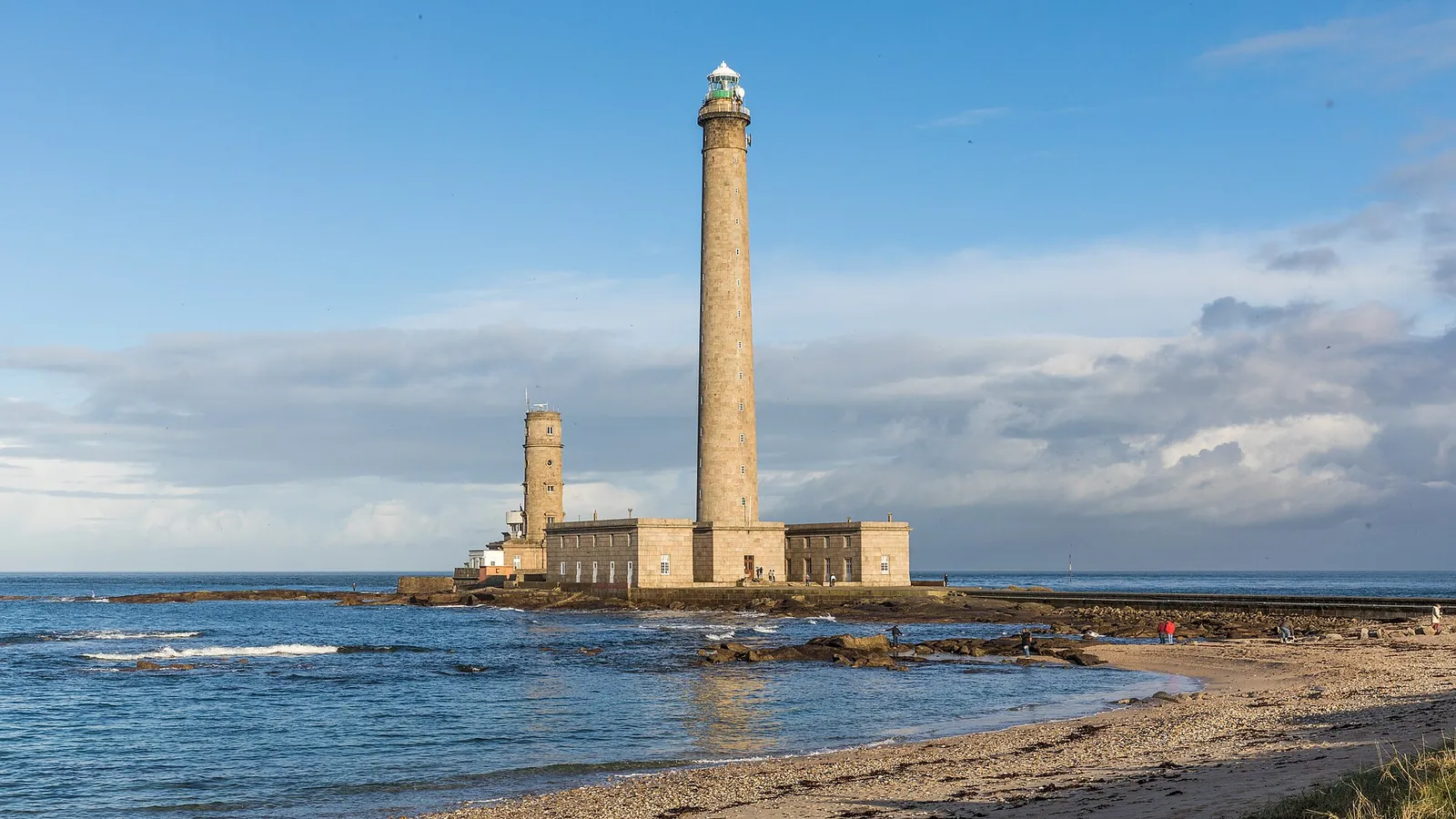
At the very end of the Val de Saire, on the north-eastern tip of the Cotentin, a granite tower rises above the rocks. Gatteville lighthouse can be seen from far away, and you have to earn it: 365 steps for a vast view over the Channel. Five minutes away, the little harbour of Barfleur and its grey granite houses round off the day. It is a day out we recommend: a little over an hour's drive, and the scenery changes completely.
Gatteville lighthouse, the granite giant of the Cotentin
At around 75 metres, Gatteville lighthouse is the second tallest lighthouse in France, just behind the one on the île Vierge, in Finistère. It watches over the Pointe de Barfleur, one of the most feared passages in the Channel. Offshore, the Raz de Barfleur is known for its very strong currents. Vauban himself wrote that the capes of Barfleur and La Hague were “the horror of seafarers”.
A story of shipwrecks and light
It was off Gatteville that the Blanche-Nef(White Ship) sank, in November 1120. The son of King Henry I of England, William Adelin, died there along with a large part of the Anglo-Norman nobility. A famous shipwreck that changed the history of the succession to the English throne.
A first granite lighthouse, 25 metres high, was lit here on 1 November 1775. It first burned coal, then sixteen oil lamps from 1780. Too small for this dangerous passage, it was replaced by the great tower you see today, designed by the engineer Charles-Félix Morice de la Rue. The first stone was laid on 14 June 1829, and the new lighthouse was lit on 1 April 1835. About 11,000 blocks of granite were needed to build it.
The old tower did not disappear: raised and turned into a signal station, it is still used today by the French Navy, which monitors shipping off the north-east of the Cotentin day and night. It is the small tower you can see next to the great lighthouse.
A few figures
- The steps: tradition has it that the lighthouse has as many steps as there are days in the year, as many windows as weeks and as many levels as months. The lighthouse website gives 365 steps; Wikipedia counts 349. Either way, your calves will remember it!
- The light: electrified in 1893 and automated in 1984, the lighthouse gives two white flashes every 10 seconds, visible at 29 nautical miles, or about 54 km.
- Protection: the lighthouse and its outbuildings have been listed historic monuments since 2009.
- The artists: the painter Paul Signac painted it in 1934, and Jean-Jacques Beineix shot scenes there for his film Diva.
The climb and the view
The visit begins with an exhibition room, then you tackle the spiral staircase. The lighthouse website says the climb takes about ten minutes. At the top, the outdoor platform offers a 360° panorama: the sea as far as the eye can see, the rocks of the headland, Barfleur harbour to the south and the Val de Saire countryside. On a clear day, it is truly spectacular. Access to the platform depends on the weather.
Good to know: the climb is not recommended for people with heart or breathing problems. Under-16s must be accompanied by an adult over 18.
Practical info 2026: opening times, prices, tips
The lighthouse is run by the ASCEE 50 association. Here are the opening times published on its official website for 2026:
- February: 10 am - 4.30 pm.
- March: 10 am - 5 pm until 8 March and at weekends; otherwise 10 am - 12 pm and 2 pm - 5 pm.
- April: 10 am - 5.30 pm.
- May, June and September: 10 am - 6 pm.
- July and August: 10 am - 6.30 pm.
- October: 10 am - 5 pm.
- November: 10 am - 12 pm and 2 pm - 4.30 pm (open all day from 10 am to 4.30 pm on 1 November and from 7 to 11 November).
- December and January: 10 am - 12 pm and 2 pm - 4 pm (open all day from 10 am to 4 pm from 26 to 31 December and on 2 and 3 January).
Closures: 1 May, 25 December and 1 January. The lighthouse also closes to the public whenever the wind exceeds 50 km/h (force 7) or during storms. On this very exposed headland, it does happen: a phone call before you set off saves disappointment (02 33 23 17 97).
2026 prices: €3.50 per adult, €3 for ages 13 to 18 and students, €1.50 for ages 5 to 12. Groups of 20 people or more: €2.50 per person, by reservation. The ticket includes the exhibition and the climb to the platform. Payment by card, cheque, chèques-vacances or cash.
The 2027 opening times have not been published yet: check the lighthouse website before you come.
When to go?
- In spring and September, the days are long, the lighthouse is open all day and there are fewer people than in high summer.
- In July and August, come when it opens, around 10 am, or in the late afternoon.
- Choose a clear, calm day: the view will be better, and the lighthouse is very likely to be open.
- The sunset is best enjoyed from the headland, at the foot of the lighthouse, once your visit is over: the light on the rocks and the granite is superb.
The Pointe de Barfleur and the Val de Saire coast
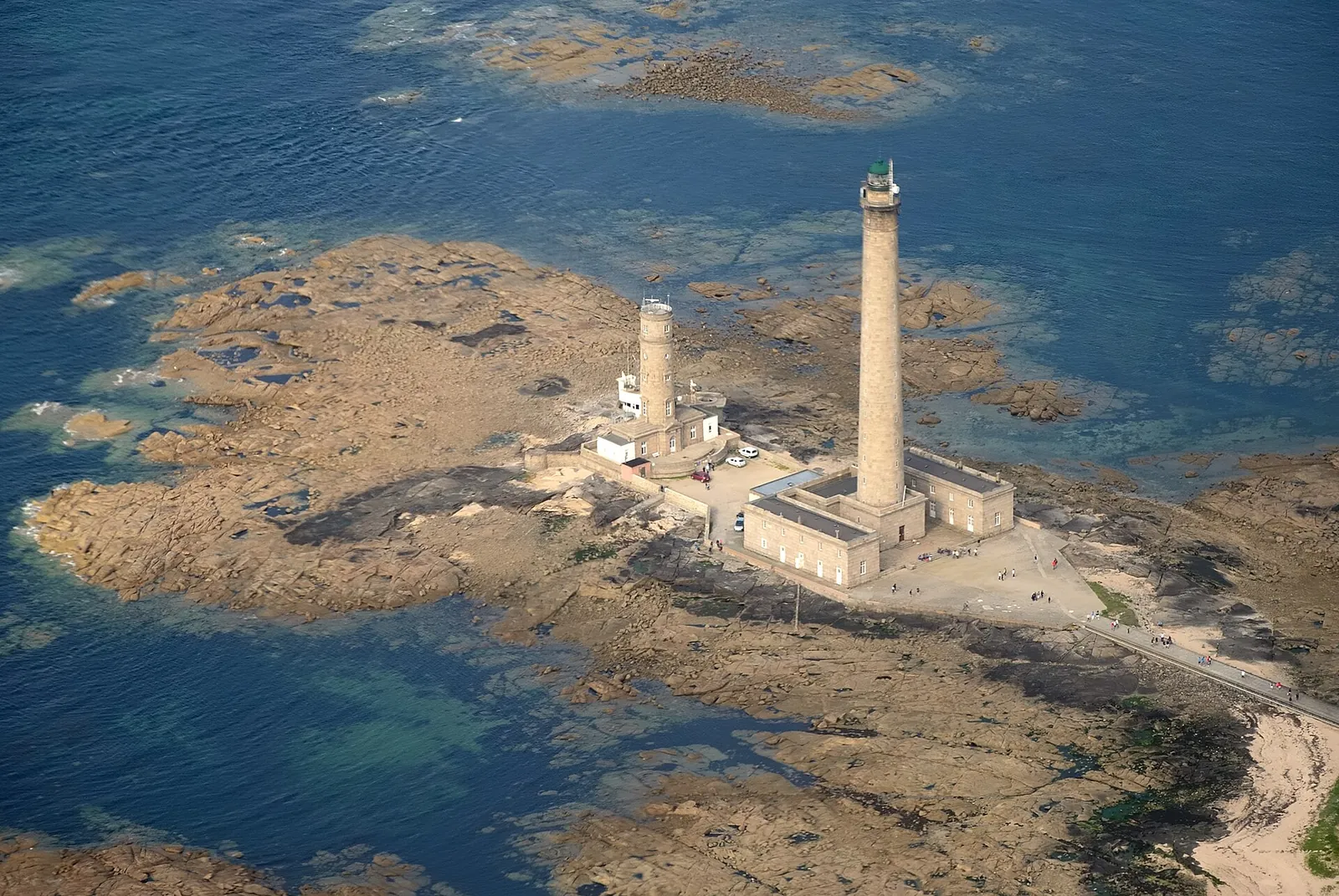
Around the lighthouse, the coast is low, rocky and cut into small coves that are called havreshere. The Pointe de Barfleur has been a protected site since 2003, covering about 300 hectares. At low tide, the rocks are uncovered a long way out to sea.
Just west of the lighthouse, theÉtang de Gattemare belongs to the Conservatoire du littoral. It is home to many birds and a protected plant, sea kale. In the village of Gatteville, don't miss the little Chapelle des Marins(sailors' chapel), a listed historic monument whose oldest parts date back to the 11th century.
The walking loop from Barfleur to the lighthouse
The most beautiful way to reach the lighthouse is on foot, along the GR 223, the coastal path. A lovely loop of about 8.4 km starts from Barfleur harbour: you follow the sea wall, then the shoreline to the Havre de Crabec, before reaching the lighthouse. The way back goes through the little harbour of Gattemare and the village of Gatteville, with its Chapelle des Marins. It is flat and easy; allow about 2 h 30 of walking (not counting the visit). The only drawback: a stretch of about 1 km along a main road.
Our tip: check the tide times before you set off, and stay on the waymarked path, which sometimes crosses private property.
Barfleur, one of the Plus Beaux Villages de France
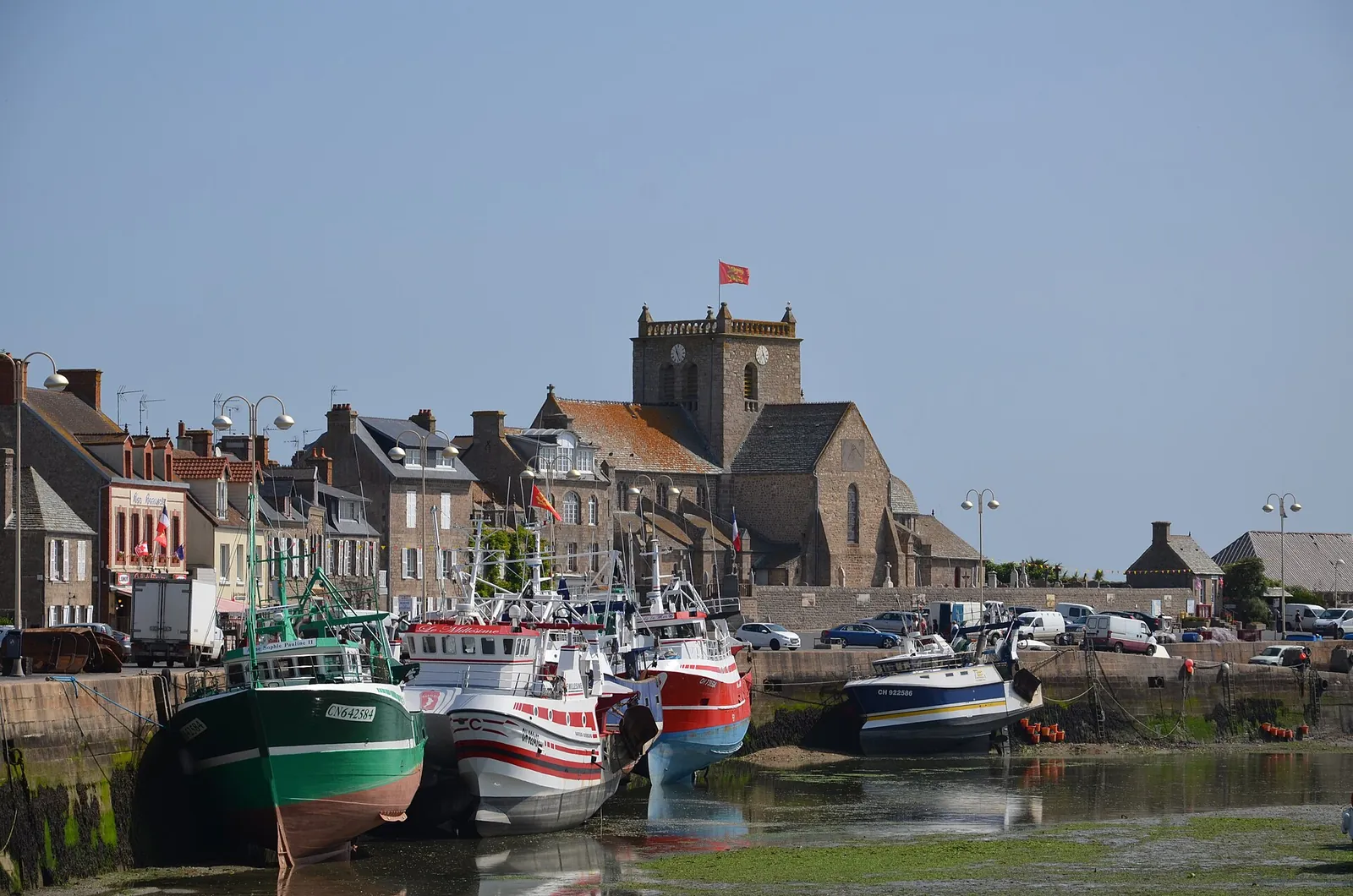
Covering just 60 hectares, Barfleur is the smallest commune in the Manche. It has just over 500 inhabitants, but a very long history. Its grey granite houses and its still-active harbour have earned it the label of Plus Beaux Villages de France. On the roofs, look out for the glazed terracotta finials, once made by the potters of the Val de Saire.
William the Conqueror's harbour
In the Middle Ages, Barfleur was the main port of the Anglo-Norman kingdom. In 1066, it was a man from Barfleur, Étienne, who piloted the Mora, William the Conqueror's ship, to England. A bronze medallion, placed in 1966 for the 900th anniversary of the event, commemorates it on a rock at the end of the harbour. Richard the Lionheart set sail from here in 1189, and King John in 1203. In 1346, during the Hundred Years' War, Edward III's English troops set fire to the town. The port never regained its medieval splendour.
The church of Saint-Nicolas and the lifeboat station
At the water's edge, on a rocky base, thechurch of Saint-Nicolas was built between the 17th and 19th centuries. It is surrounded by a seaside cemetery. Inside, a 16th-century Flemish-school painting of the Visitation is a listed historic monument.
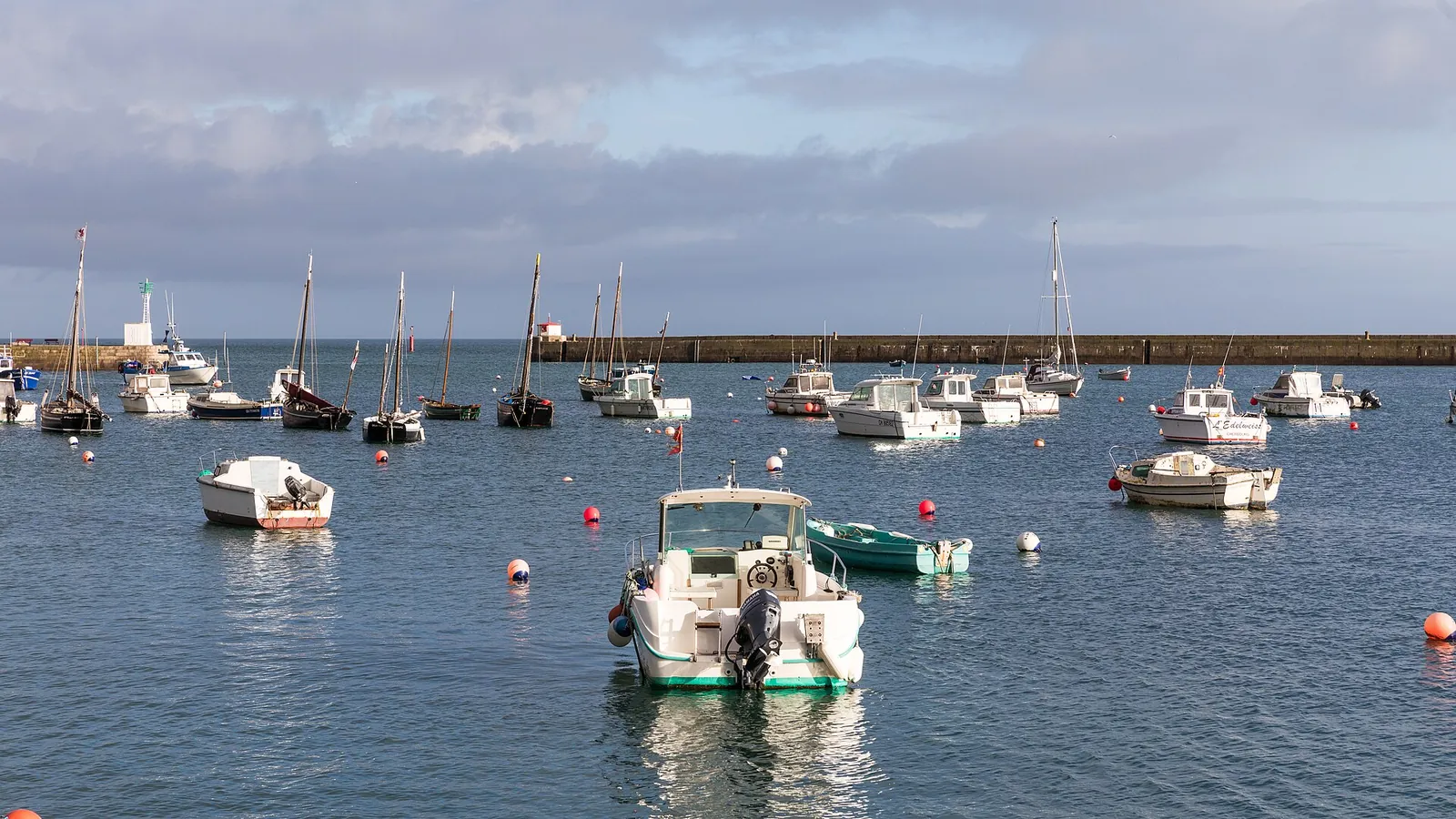
In 1865, Barfleur was also home to the first sea rescue station on the Channel, the second in France. The lifeboat Amiral de Tourville can be seen in the harbour today.
Barfleur mussels
Barfleur is also known for its wild mussel, the “Blonde de Barfleur”. It is dredged from natural beds off the east coast of the Cotentin by a limited number of small boats. Fishing only opens if the beds allow it: some years, there are none at all. If they are in season, try them at the harbour!
The painter Paul Signac stayed in Barfleur from 1932 to 1935. He found there a harbour that was “lively enough”, lined with fine architecture. You understand why as you stroll along the quays.
Our day-out ideas
- The classic day: leave the campsite around 9 am, climb the lighthouse when it opens, picnic on the headland, then spend the afternoon in Barfleur, strolling around the harbour. Back in time for dinner.
- The walking day: park in Barfleur and do the 8.4 km loop along the GR 223, with the lighthouse visit halfway. Bring good shoes and a windproof jacket.
- The big Val de Saire day: start with Saint-Vaast-la-Hougue (about 68 min by car (72 km) from the campsite) and the île Tatihou, then head up to Barfleur (about 15 minutes by road) and finish at the lighthouse (5 minutes more).
- On the way: the outward journey passes near Carentan and the marshes. You can stop at the Marshes Park visitor centre or at Utah Beach (see our articles on the Bessin marshes and on the D-Day beaches).
Saint-Vaast-la-Hougue and the île Tatihou
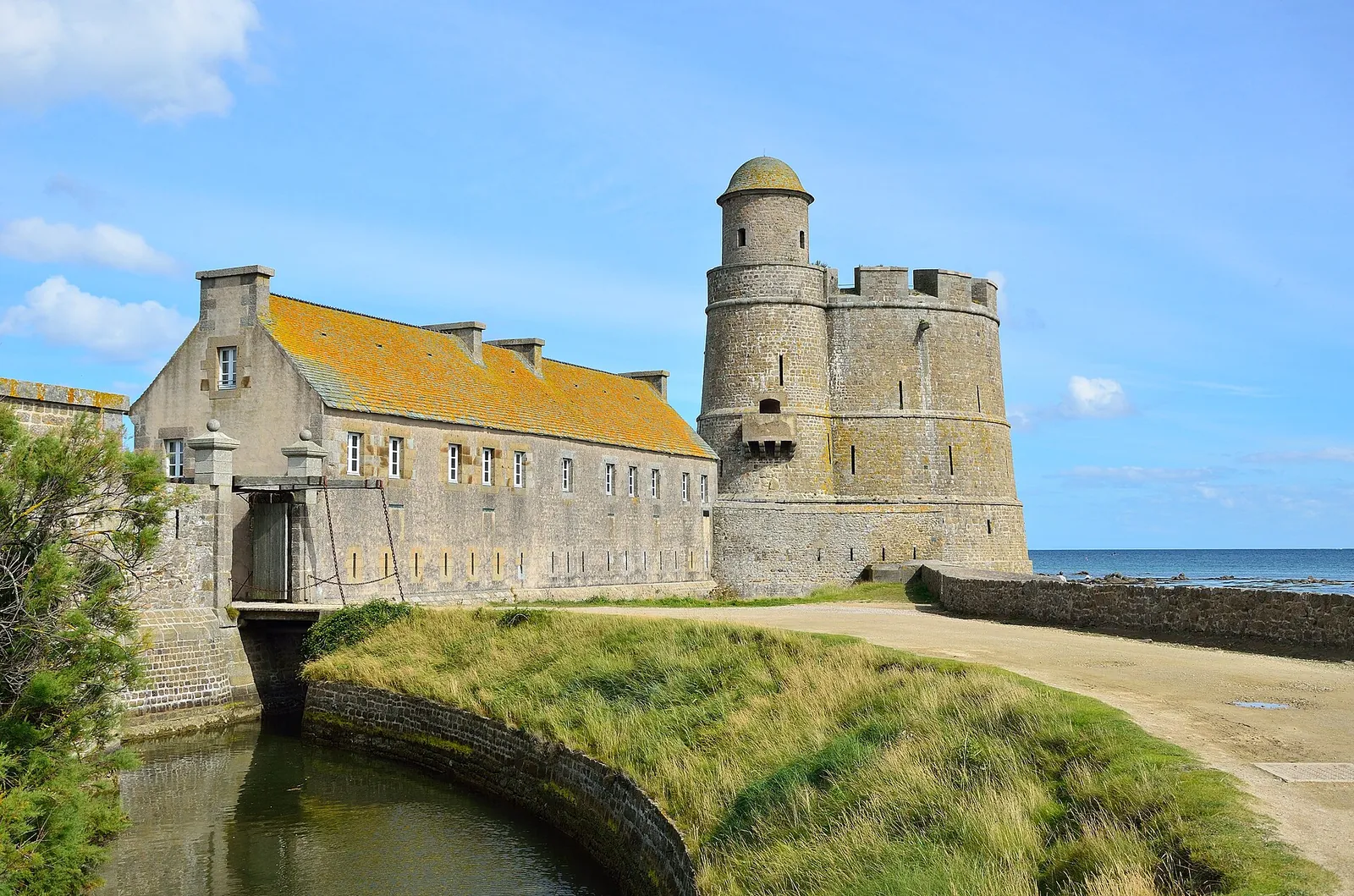
The towers of La Hougue and Tatihou are among the Vauban fortifications added to the UNESCO World Heritage List in 2008. The île Tatihou is reached by amphibious boat, the Tatihou III, in 5 to 15 minutes. The package includes the return boat trip, the museum, the gardens and the Vauban tower: €14 per adult, €6.50 for ages 3 to 18 (2026 prices). The crossing must be booked. In 2026, the island was open until 1 November, and it is due to reopen on 26 March 2027.
For your picnic, stop at our farm shop before you set off: regional products and little Normandy treats. And for more day-out ideas, have a look at our page around the campsite and our events calendar.
Getting there from the campsite
Gatteville lighthouse is about 78 min by car (82 km) from the campsite, via the N174 then the N13, and Barfleur about 74 min by car (79 km). Between the village and the lighthouse, it is only about 5 km. The lighthouse website says it can be reached on foot. For a full day, leave early: you will enjoy the lighthouse before the crowds, and you will come back to sleep in the quiet of the bocage, far from the bustle of the coast.
Frequently asked questions
How many steps do you have to climb at Gatteville lighthouse?
The lighthouse website gives 365 steps, one for each day of the year. Wikipedia counts 349. The climb takes about ten minutes.
Is Gatteville lighthouse open all year round?
Almost: in 2026, it was open every month, except on 1 May, 25 December and 1 January. It also closes when the wind exceeds 50 km/h or during storms. Call 02 33 23 17 97 before setting off on a windy day.
How much does the lighthouse visit cost?
In 2026: €3.50 per adult, €3 for ages 13 to 18 and students, €1.50 for ages 5 to 12.
Can you visit the lighthouse with children?
Yes, children love it. Under-16s must be accompanied by an adult over 18. For the little ones, remember that 365 steps up, then back down, is a long way.
How long does it take from Cerisy-la-Forêt?
Allow about 78 min by car (82 km) for the lighthouse, and about 74 min by car (79 km) for Barfleur.
- Gatteville lighthouse (ASCEE 50), official website: phare-de-gatteville.fr, opening periods and prices (version published in September 2026)
- Normandie Tourisme, Gatteville lighthouse, GR 223
- Wikipedia: Gatteville lighthouse, Gatteville-le-Phare, Barfleur
- Les Plus Beaux Villages de France, Barfleur ; Cotentin tourist office, encotentin.fr
- Visorando, Gatteville lighthouse loop from Barfleur ; Manche Tourisme, GR 223 Saint-Vaast-la-Hougue - Gatteville lighthouse
- Normandie Fraîcheur Mer, the Barfleur mussel ; Tendance Ouest, a season without Barfleur mussels
- Île Tatihou (Manche Département): tatihou.manche.fr, getting to the island ; UNESCO, Fortifications of Vauban
- Travel times calculated from the campsite with OpenStreetMap (OSRM), given as a guide only.